Devpost
Participate in our public hackathons
Devpost for Teams
Access your company's private hackathons
Grow your developer ecosystem and promote your platform
Drive innovation, collaboration, and retention within your organization
By use case
Blog
Insights into hackathon planning and participation
Customer stories
Inspiration from peers and other industry leaders
Planning guides
Best practices for planning online and in-person hackathons
Webinars & events
Upcoming events and on-demand recordings
Help desk
Common questions and support documentation
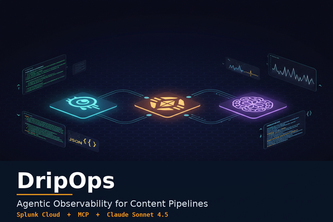
Three-lane observability stack — Cloudflare Workers + Splunk Cloud + Claude Sonnet 4.5 via MCP — that watches my content pipeline and autonomously fires PRs or Telegram alerts when it breaks.
SENTINEL transforms Splunk alerts into autonomous action. It uses multi-agent AI to instantly triage threats, investigate IPs, and execute remediation playbooks in real-time.
From incident noise to approved action.
A Splunk-native agentic incident commander designed to transform raw observability signals into guided operational decisions
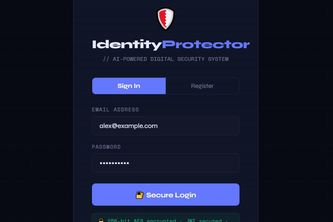
An AI-powered system that protects your digital identity by detecting, preventing, and responding to online identity threats in real time.
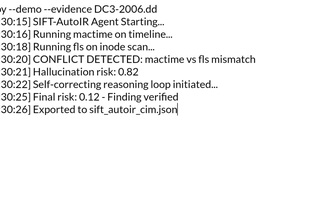
Autonomous AI agent that analyzes SIFT disk images, self-corrects hallucinations, and exports findings to Splunk CIM for SOC teams.
Autonomous AI agent that investigates supply chain attacks in minutes — hunts IOCs, maps blast radius across Splunk, and generates remediation. You stay in control.
Seeing Earth in every way that matters.
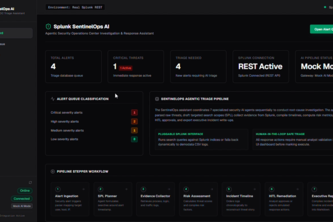
SentinelOps: From alert to action at the speed of AI.
Engram is an agentic ops platform for Splunk that learns from every incident—predicting, investigating, and auto-hardening defenses so the same threat is caught instantly next time.
A multi-agent SaaS platform that acts as your AI executive council to autonomously build enterprise tech stacks and business strategies.
Autonomous AI agent that cuts Splunk costs by finding unsearched logs, tracing them to code, and opening fix PRs.
Autonomous, evidence-backed SOC triage on the official Splunk MCP Server.
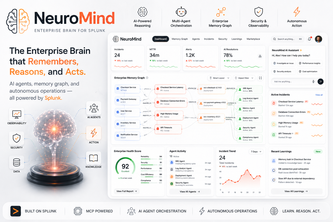
NeuroMind is an Enterprise Brain for Splunk that remembers, reasons, and orchestrates AI agents to autonomously investigate incidents, predict risks, and run enterprise operations.
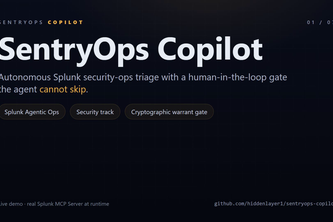
An autonomous Splunk ops agent that investigates live but can't act alone — remediation is gated by an HMAC-signed warrant verified at the Splunk MCP boundary. A cryptographic human-in-the-loop.
Your code and your logs, finally in one place.
SpanCommand gives each leader a dedicated AI agent for their span of control—tasks from everyone below them roll up the org chart into one place, where they approve, reassign, down the hierarchy.
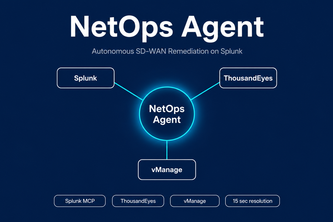
"Stop watching the network break. Start fixing it."
Splunk Sentinel transforms raw security logs into actionable incident intelligence using AI-powered threat detection, investigation workflows, timeline reconstruction, and response automation.
Autonomous root cause analysis powered by Splunk MCP and Groq.
An agentic SOC assistant for Splunk that investigates alerts with REST evidence, builds attack timelines, scores risk, keeps analysts in control, and exports reports.
Multi-agent incident command: detect, prove, predict, remediate.
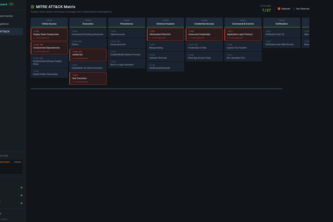
It automates threats by converting Splunk alerts into reports with Llama3 agents. It captures webhooks, parses CPU spikes and maps payloads to the MITRE ATT&CK framework, updating a Dashboard.
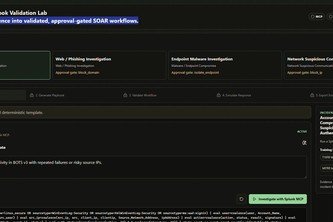
Validate SOAR playbooks against real BOTS v3 evidence using Splunk MCP, MITRE ATT&CK, live VirusTotal enrichment, and approval-gated dry runs.
97 – 120 of 315